Many headlines about the future of work focus on jobs that may disappear.
But there is another side to the story.
While some jobs are expected to decline, millions of new opportunities are being created.
According to the World Economic Forum’s Future of Jobs Report 2025, around 170 million new jobs could be created globally by 2030. That is one of the biggest shifts in the modern labour market.
The question is no longer whether jobs are changing.
The question is: Where are the new opportunities?
The Future Is Creating New Careers
Every major change in history has created new types of work.
The Industrial Revolution created factory jobs.
The internet created web designers, software developers, and digital marketers.
Today, artificial intelligence, climate change, population changes, and new technologies are creating another wave of opportunities.
Many of the fastest-growing jobs today barely existed a few years ago.
Others are becoming more important because the world is changing.
The Fastest-Growing Jobs by 2030
According to the World Economic Forum, some of the fastest-growing occupations include:
• AI and Machine Learning Specialists
• Big Data Specialists
• FinTech Engineers
• Software and Applications Developers
• Cybersecurity Specialists
• Renewable Energy Engineers
• Environmental Engineers
• Autonomous Vehicle Specialists
• Data Analysts and Scientists
• Internet of Things Specialists
These roles are growing because organizations need workers who can understand and use new technologies.
But technology is not the whole story.
The Surprise Jobs on the List
Many people assume that only technology jobs are growing.
The report shows something different.
Several non-technical occupations are also expected to grow rapidly.
These include:
• Care Workers
• Nursing Professionals
• Social Workers
• Teachers
• Agricultural Workers
• Delivery Drivers
• Construction Workers
Why?
Because people still need healthcare, education, food, housing, and community support.
Technology can help with these services, but it cannot replace the human need for them.
Why Healthcare Jobs Are Growing
Around the world, populations are aging.
People are living longer than before.
As a result, countries need more healthcare workers, nurses, caregivers, and medical professionals.
This trend is expected to continue for many years.
For young people looking at future careers, healthcare remains one of the most resilient sectors.
Why Green Jobs Are Growing
Climate change is changing economies around the world.
Governments and businesses are investing heavily in renewable energy, sustainability, and environmental protection.
This is creating demand for:
• Solar energy specialists
• Wind energy technicians
• Environmental engineers
• Sustainability experts
• Climate adaptation professionals
Many jobs that did not exist a decade ago are becoming important parts of the modern economy.
The Rise of AI Jobs
Artificial intelligence is creating opportunities even as it changes existing jobs.
Organizations need people who can:
• Build AI systems
• Manage AI tools
• Understand data
• Improve cybersecurity
• Use technology responsibly
The future may belong not only to people who can use AI, but also to those who understand how to work alongside it.
The Skills Behind the Growth
When we look closely at the fastest-growing jobs, a pattern appears.
Many require skills such as:
• Analytical thinking
• Problem-solving
• Curiosity
• Technology literacy
• Adaptability
• Communication
• Continuous learning
These skills can help people move across different industries as the labour market changes.
In other words, the future may reward learning as much as experience.
A Different Way to Think About Careers
Many people ask:
“What job should I choose?”
A better question may be:
“What skills should I build?”
Specific jobs will change over time.
Skills can travel with you from one opportunity to another.
A person who learns problem-solving, communication, technology, and leadership skills can often adapt more easily when industries change.
What This Means for Students
Students entering the workforce today face a different world than previous generations.
The most successful careers may not follow a straight line.
Workers may change industries, learn new technologies, and develop new skills several times during their careers.
This is no longer unusual.
It is becoming normal.
The Bigger Picture
The future of work is not only a story about jobs disappearing.
It is also a story about new opportunities emerging.
The World Economic Forum projects millions of new roles across technology, healthcare, education, sustainability, and other growing sectors.
The challenge for workers is not simply avoiding decline.
The challenge is preparing for growth.
What This Means for You
Instead of asking whether technology will replace jobs, consider a different question:
Where is demand growing?
The workers who thrive in the coming decade may not be the ones who predict the future perfectly.
They may be the ones who continuously learn, adapt, and position themselves where new opportunities are emerging.
Read Next
The Hidden Workforce Crisis Nobody Is Talking About: Why Demographics May Shape the Future of Work More Than Technology.
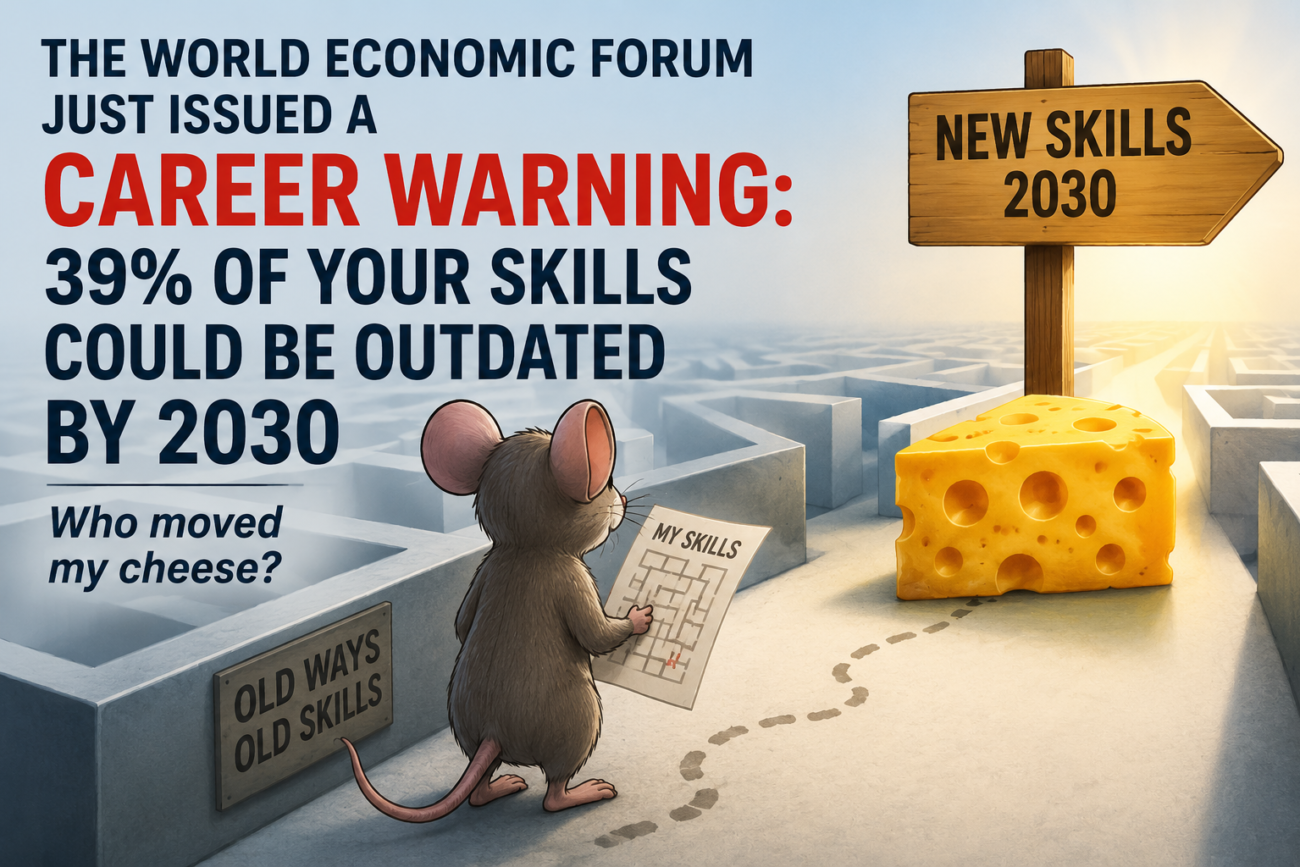
Source: World Economic Forum Future of Jobs Report 2025. The report found that approximately 39% of current worker skills are expected to be transformed or become outdated by 2030, while a majority of workers are expected to require training or reskilling during the same period.
The World Economic Forum Just Issued a Career Warning: 39% of Your Skills Could Be Outdated by 2030
