Imagine waking up in 2030 and discovering that the skills you worked hard to learn are no longer the skills employers want.
That sounds scary.
But according to the World Economic Forum’s Future of Jobs Report 2025, that is exactly the challenge many workers may face.
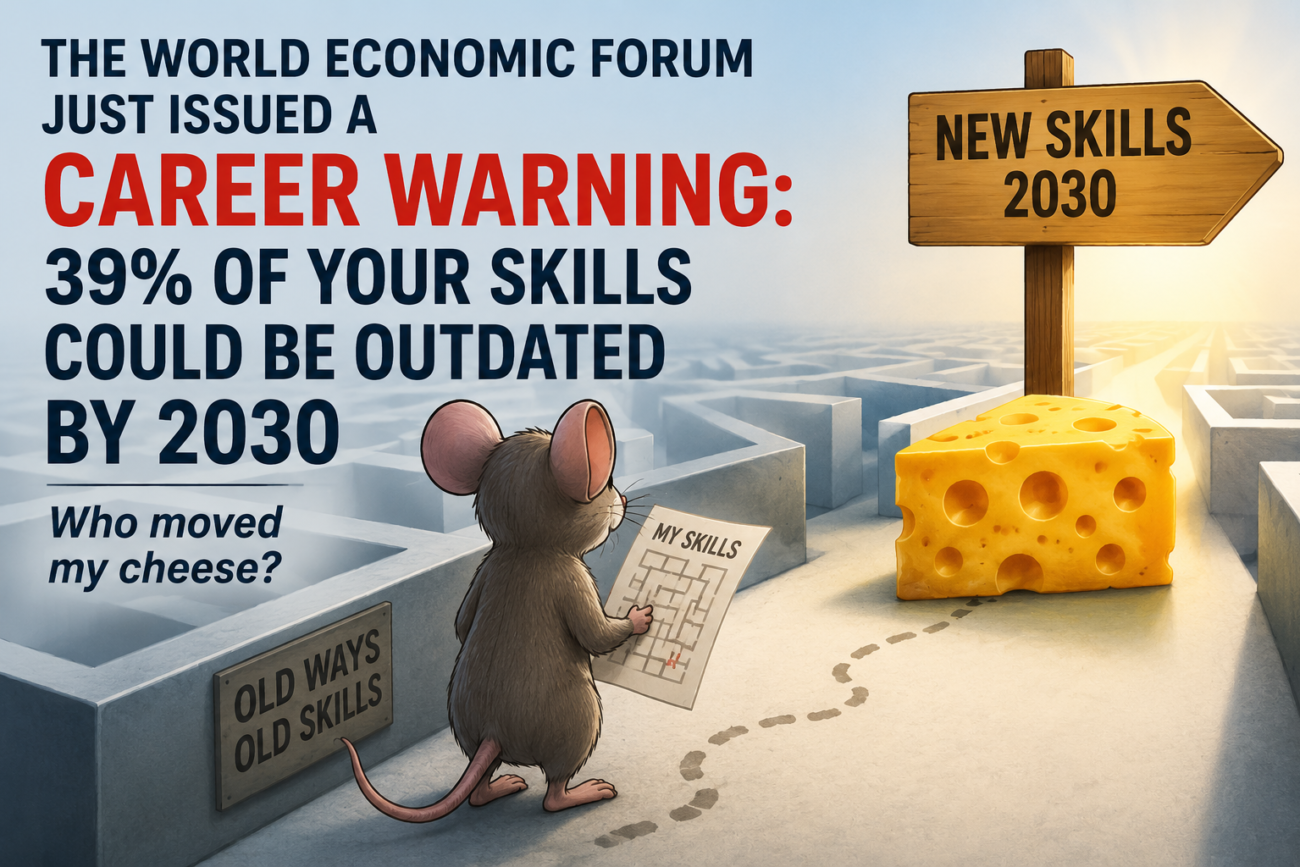
The report says that by 2030, around 39% of workers’ current skills will be transformed or become outdated.
Read that again.
Almost 4 out of every 10 skills people use today may not have the same value in just a few years.
Most people are not talking about this.
They are talking about salaries.
They are talking about promotions.
They are talking about finding a job.
But very few people are asking the most important question:
Will my skills still matter in five years?
The Real Message Hidden Inside the Report
Many headlines about the future of work focus on artificial intelligence.
People ask:
“Will AI take my job?”
The report points to a different question.
“What happens if your job stays, but the skills needed to do it completely change?”
That is a much bigger problem.
Think about it.
Ten years ago, many professionals never used AI tools.
Today, employers expect workers to understand digital tools, data, online collaboration platforms, and technology.
The job title may stay the same.
But the skills needed to do the job have changed.
That process is happening across almost every industry.
Somebody Moved the Cheese
Many people know the famous book Who Moved My Cheese?
The lesson is simple.
The world changes.
People who notice the change early have time to prepare.
People who ignore the change often get left behind.
The Future of Jobs Report feels like one giant warning.
The cheese is moving.
The question is whether we are paying attention.
Many professionals are still preparing for the job market of yesterday.
Employers are preparing for the job market of tomorrow.
Those are not the same thing.
The Skills Employers Want Are Changing Fast
The report highlights several skills that are becoming more important every year.
These include:
- Artificial Intelligence and Big Data
- Cybersecurity
- Technology Literacy
- Analytical Thinking
- Creative Thinking
- Leadership
- Resilience
- Lifelong Learning
Notice something interesting.
Not all of these skills are technical.
Some of the fastest-growing skills are human skills.
Employers still need people who can think clearly, solve problems, communicate ideas, and adapt to change.
Technology is important.
But being able to learn may become even more important.
The Degree Is Not the Finish Line
For many years, people believed that education worked like this:
Go to school.
Get a degree.
Find a job.
Build a career.
Today, that model is breaking down.
A degree is still valuable.
But it is no longer enough on its own.
The world is changing too quickly.
A qualification earned five years ago cannot automatically prepare someone for the next ten years.
The professionals who succeed will be the ones who keep learning.
The future belongs to people who stay curious.
The Statistic That Should Worry Everyone
One finding from the report stood out more than almost anything else.
If the global workforce consisted of 100 people:
- 59 would need training by 2030.
- Only some would receive the training they need.
- Others could find themselves falling behind.
That means learning is no longer optional.
It is becoming a career survival skill.
Many people think training is something you do when your employer asks.
The future may require a different mindset.
Training must become a habit.
Why This Matters for Young Professionals
If you are a student, graduate, intern, or early-career professional, this warning is especially important.
The jobs you apply for in 2026 may not look the same in 2030.
The tools will change.
The expectations will change.
The skills employers value will change.
The good news is that you have time.
The people who adapt early often benefit the most.
Small actions today can create big opportunities later.
Learning a new digital skill.
Taking an online course.
Improving your communication skills.
Understanding AI.
Building analytical skills.
These investments may seem small now, but they can make a huge difference over time.
The Biggest Career Mistake You Can Make
The biggest mistake is not learning the wrong thing.
The biggest mistake is assuming nothing will change.
History shows that every generation experiences major shifts in the world of work.
This generation is experiencing one of the biggest shifts yet.
Technology is changing.
Industries are changing.
Jobs are changing.
Skills are changing.
The people who accept this reality will be better prepared than those who ignore it.
Final Thoughts
The World Economic Forum is not saying that millions of people will suddenly lose their jobs.
The warning is more subtle than that.
The report is telling us that the value of skills is changing.
The future may belong less to those who know the most today and more to those who are willing to learn the most tomorrow.
The question is no longer:
“What job do I want?”
The better question might be:
“What skills am I building that will still matter in 2030?”
Because by the time you discover your skills are outdated, catching up may be much harder than starting today.
Source: World Economic Forum Future of Jobs Report 2025. The report found that approximately 39% of current worker skills are expected to be transformed or become outdated by 2030, while a majority of workers are expected to require training or reskilling during the same period.
The Global Career Shift: Why Skills Matter More Than Job Titles in 2026
