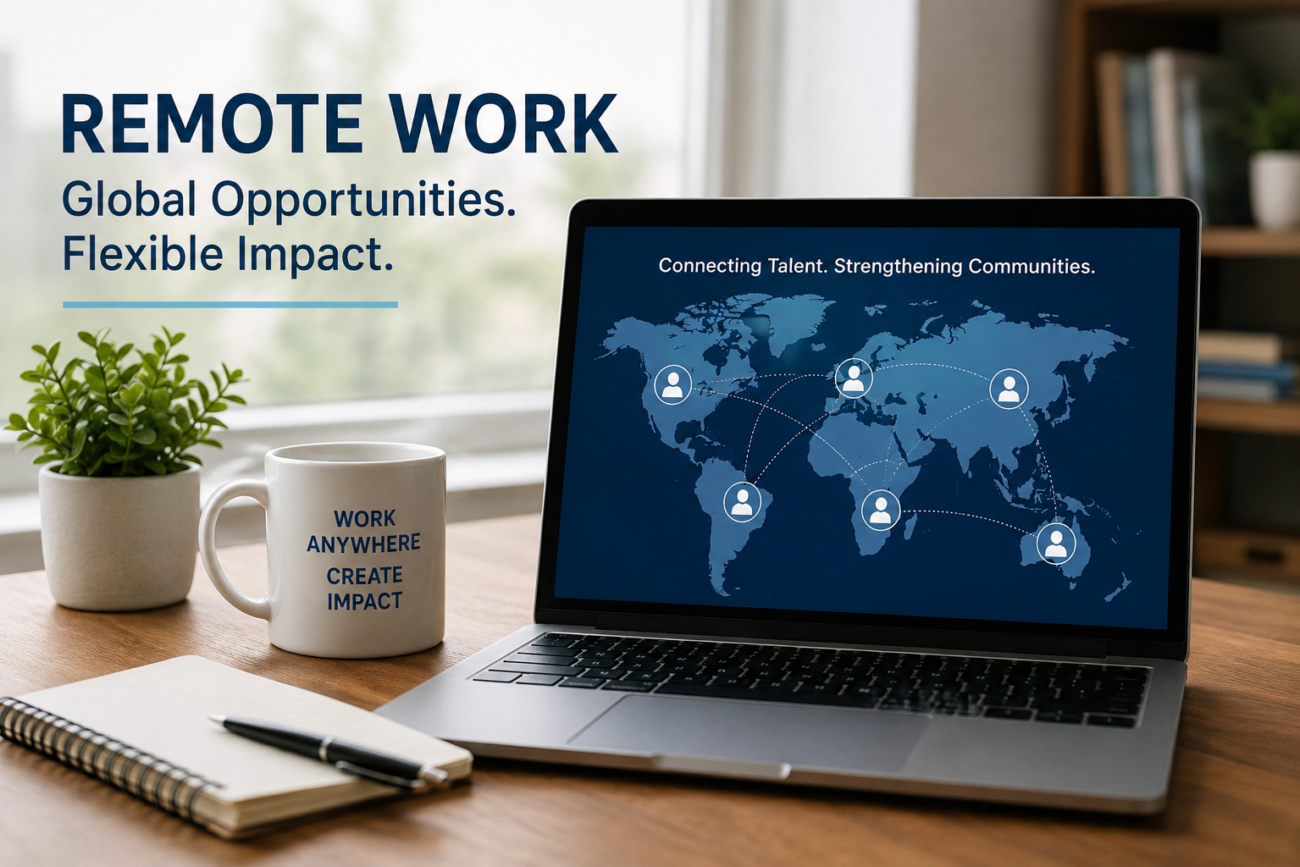
Remote work has transformed how international organizations recruit talent, manage projects, and deliver programmes across regions. What was once limited to occasional consultancy assignments has evolved into a broader global workforce model involving digital collaboration, distributed teams, and flexible expertise networks.
Across NGOs, United Nations agencies, research institutions, advocacy organizations, and development programmes, remote work is increasingly becoming part of long-term operational strategy rather than a temporary arrangement.
This guide explores how remote work is changing international careers, the types of organizations embracing flexible recruitment, and what professionals should understand before pursuing remote opportunities in the global development sector.
Table of Contents
The Shift Toward Flexible Global Recruitment
International organizations are increasingly moving toward more flexible recruitment systems that allow them to access specialized expertise without relying entirely on office-based staffing structures.
Several factors have accelerated this shift:
- digital transformation across organizations
- expansion of virtual collaboration systems
- rising demand for specialized technical expertise
- cost-efficiency considerations
- cross-border programme implementation
As a result, many organizations now recruit professionals who may never physically relocate to headquarters or regional offices.
Instead, work is coordinated through:
- virtual teams
- online project management systems
- cloud collaboration platforms
- digital reporting structures
This has significantly expanded access to international opportunities for professionals in different regions around the world.
Organizations Increasingly Using Remote Talent
Remote recruitment is no longer limited to technology companies.
Organizations increasingly using remote or home-based expertise include:
- international NGOs
- UN agencies
- multilateral organizations
- policy institutes
- global advocacy organizations
- humanitarian response programmes
- donor-funded initiatives
- research networks
Many organizations now combine:
- headquarters staff
- regional offices
- country teams
- remote consultants
- short-term specialists
into integrated operational structures.
Common Areas Where Remote Work Is Expanding
Digital Communications & Advocacy
Digital engagement has become central to international advocacy and awareness campaigns.
Remote professionals are increasingly recruited for:
- content strategy
- multimedia production
- social media management
- campaign coordination
- digital storytelling
These functions often operate effectively across distributed international teams.
Research & Knowledge Management
Research-heavy organizations increasingly rely on remote professionals for:
- literature reviews
- policy analysis
- data synthesis
- technical writing
- evidence mapping
Professionals with strong analytical and writing skills remain highly competitive in this area.
Readers interested in broader NGO career structures may also explore:
Careers in International NGOs: Roles, Skills & How Recruitment Works
Technical Advisory Support
Many international programmes recruit remote technical specialists in:
- public health
- governance
- climate policy
- monitoring and evaluation
- digital systems
- gender programming
- economic policy
These roles are often expertise-driven rather than location-driven.
Learning, Training & Capacity Building
Remote learning and training systems have expanded significantly across international organizations.
Professionals may support:
- online workshops
- executive training
- technical mentorship
- e-learning systems
- virtual facilitation
This trend continues to grow as organizations invest in scalable digital capacity-building models.
What Makes Remote International Work Different
Remote international work differs from traditional remote employment in several ways.
Many roles involve:
- multicultural coordination
- cross-regional collaboration
- donor-funded deliverables
- short implementation timelines
- international reporting requirements
Professionals may work across multiple time zones and institutional systems simultaneously.
Unlike conventional remote employment, many international opportunities are structured around:
- consultancy agreements
- project outputs
- milestone-based deliverables
- specialized expertise
Remote Work Does Not Always Mean Flexibility
One common misconception is that remote international work is always flexible and low-pressure.
In practice, many remote roles involve:
- intensive deadlines
- high reporting expectations
- stakeholder coordination
- performance-based contracts
- virtual meetings across time zones
Successful professionals often require strong self-management and organizational skills.
Digital Skills Becoming More Important
As organizations expand digital operations, technical and digital literacy has become increasingly valuable.
Professionals with experience in:
- digital collaboration tools
- online facilitation
- data visualization
- AI-assisted research
- content systems
- remote project management
may become more competitive across international recruitment processes.
Readers interested in emerging digital career pathways may also review:
The Rise of AI Prompting Careers: Skills, Opportunities & How to Position Yourself
How Professionals Are Positioning Themselves
Professionals preparing for remote international careers often strengthen their profiles through:
- technical specialization
- international project experience
- strong written communication
- independent project delivery
- multilingual ability
- digital collaboration experience
Executive education, certifications, and specialized training are also becoming more common among competitive candidates.
The Future of Remote International Careers
Remote work is likely to remain a permanent component of international recruitment structures.
While not every role can operate remotely, many organizations now view distributed expertise as a long-term operational advantage.
Future growth areas may include:
- digital policy support
- AI-assisted programme management
- virtual research collaboration
- remote technical advisory systems
- global digital advocacy
- online capacity building
For professionals seeking international careers, understanding how remote recruitment structures operate may become increasingly important in the years ahead.
Related Editorial Guides
Readers may also explore:
Official Resources
Disclaimer
This article is published for informational and editorial purposes only. Research Jobs Hub is an independent editorial platform focused on international career guidance, recruitment insights, and professional development content across research, humanitarian, NGO, and multilateral sectors.
